Economist · Educator · Founder

James Magnus-Johnston

Director, Redekop School of Business — Canadian Mennonite University. Biophysical economist, teacher, and builder of places where ideas meet practice.

I teach economics and social science at the intersection of analysis and action. My research bridges biophysical economics, political economy, and history — asking how debt-driven growth shapes our material world. My classroom asks students to think before they conclude.
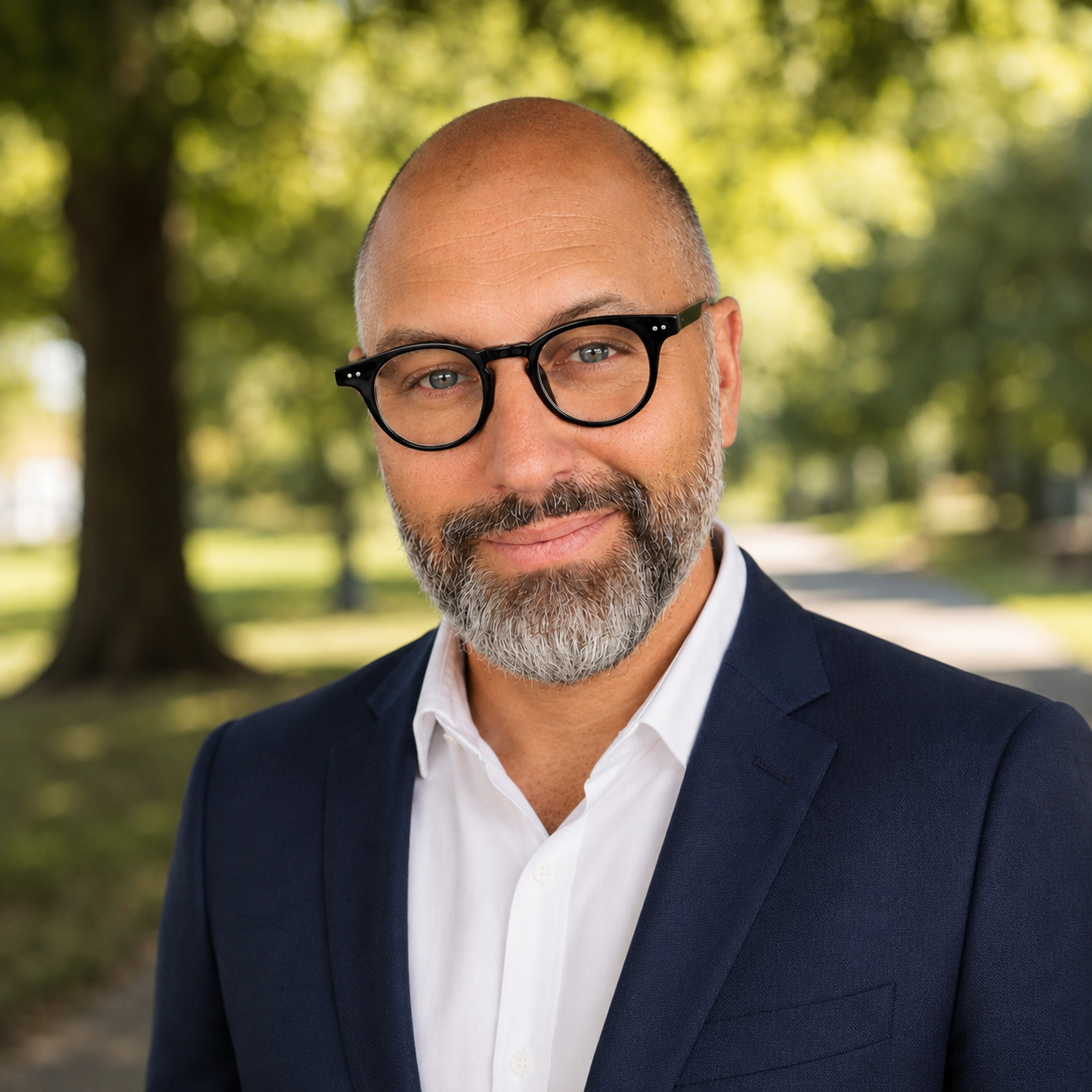
James Magnus-Johnston

I am an Assistant Professor and Director of the Redekop School of Business at Canadian Mennonite University, where I have taught across economics, political studies, business, and communications for roughly thirteen years. I have built courses, founded a coffee shop, sat on the board of a multi-billion-dollar credit union, and spent the last five years writing a doctoral dissertation about what happens when economies grow themselves into debt they cannot repay.

My academic life has always moved across boundaries. I hold an MPhil in Land Economy from Cambridge and have submitted a PhD in biophysical economics at McGill, where I worked under the Leadership for the Ecozoic program — a transdisciplinary partnership across law, anthropology, communications, and the natural sciences.

Outside the classroom I have co-owned an award-winning coffee shop, served as a board director at Assiniboine Credit Union, founded CMU's Centre for Resilience, a coworking space, and contributed to policy initiatives in Manitoba. I write op-eds and research papers, and believe the world needs more spaces for genuine, rigorous dialogue across ideologies and cultures.

My goal is not to produce students who hold the right views, but students who can think rigorously.
— Teaching Statement
Research

Debt has a biophysical signature.

Doctoral Thesis

Mapping Debt's Biophysical Signature: Material Flow and Political Sentiment in Canada and Argentina

The thesis examines the material and energetic consequences of debt-driven growth in two contrasting economies. It tests whether debt shifts resource allocation in ways conventional methods do not capture — bridging biophysical economics, political economy, and history.

McGill University · Leadership for the Ecozoic · Defence pending

Research Interests

Biophysical economics Political economy of debt Endogenous money Sociometabolism EROI & energy economics Human flourishing Material flow analysis Moral foundations & populism Ecological macroeconomics

Affiliations

Herman Daly Research Fellow CASSE — Chief Economist (2018–20)

Selected Publications Journal Articles · Forthcoming

  • Under Review Magnus-Johnston, J. Mapping debt's biophysical signature: A comparative analysis of debt–throughput coupling and political grievance in Canada and Argentina. Ecological Economics.
  • Under Review Magnus-Johnston, J. Debt's matter-energy multiplier: Toward a theory of dysregulated economic metabolism. Ecological Economics.
  • Magnus-Johnston, J. (2025). God and the machine: Learning in the metamodern revolution. In P. G. Doerksen (Ed.), A time of reckoning: Telling the Canadian Mennonite University story. CMU Press.
  • Magnus-Johnston, J. (2016). What is the steady state economy? In H. Washington & P. Twomey (Eds.), A future beyond growth: Towards a steady state economy. Routledge.

Policy Reports

  • Magnus-Johnston, J. (2017). Carbon pricing and competitiveness: Policy options for Manitoba businesses. Winnipeg Chamber of Commerce.
  • Fernández, L. (Ed.), Magnus-Johnston, J., & Hudson, M. (2016). An economic analysis of the Energy East pipeline in Manitoba. Canadian Centre for Policy Alternatives.
  • Magnus-Johnston, J. (Ed.) & Transition Winnipeg Initiating Committee. (2014). Transition Winnipeg energy descent action plan. Transition Winnipeg.

Selected Writing

  • Magnus-Johnston, J. (March 2025). Requiem for Canada? Regional tensions and changing demographics may fuel Trump's annexation hopes. The Conversation. Also translated into French and republished in The Tyee.
  • Magnus-Johnston, J. (January 2025). Beyond the ideological echo chamber. Resilience.org.
  • Magnus-Johnston, J. (October 2014). Are we hard-wired to think we can grow forever? Resilience.org.
Teaching

Eighteen courses, four departments.

I build courses around discussion because I believe ideas are tested in argument, not in passive reception. The most important habit I try to build in students is the discipline of analysis before conclusion — slowing the move from observation to judgment.

I integrate AI tools into the classroom explicitly rather than treating them as a threat. The goal is students who can work with AI fluently and critically — which is increasingly the condition of serious intellectual and professional work.

Economics 2nd–4th yr

  • Ecological Economics2nd yr
  • Citizenship, Land, Economy3rd yr
  • Innovation Lab4th yr
  • Behavioural EconomicsIntensive

Business 2nd–4th yr

  • Entrepreneurship2nd yr
  • Business Ethics2nd yr
  • Social Entrepreneurship2nd yr
  • Organizational Behaviour2nd yr
  • Organizational Leadership3rd yr
  • Business & Organizational Communications2nd yr

Political Studies 1st–3rd yr

  • Democracy & Dissent1st yr
  • Global Politics1st yr
  • Social & Political Philosophy1st yr
  • Social Welfare2nd yr
  • The Culture Wars3rd yr

Communications 2nd–3rd yr

  • Politics, Society & the Mass Media2nd yr
  • Business & Organizational Communicationscross-listed
The most important questions cannot be answered within a solitary discipline alone — but this interdisciplinary work must be accompanied with intellectual and methodological rigour.
— James Magnus-Johnston
Beyond the Academy

Built things. Sat on boards. Made coffee.

Founding Director, CMU Centre for Resilience

2017–2025

Built a co-working lab and experiential learning hub at CMU connecting students to real clients, investor pitches, and ventures that continued well beyond the semester.

Board Director, Assiniboine Credit Union

2016–2023

Seven years on the board of one of Canada's largest independent financial cooperatives — a multi-billion-dollar firm with a triple-bottom-line mandate.

Co-owner, Fools & Horses Coffee

2014–2020

Co-founded and ran a triple-bottom-line coffee shop in downtown Winnipeg. Recognized as Most Innovative Business Model by the Downtown BIZ in 2016.

Founding Co-Chair, Transition Winnipeg

2012–2017

Co-founded the Winnipeg chapter of the international Transition Towns movement. Edited and published the city's Energy Descent Action Plan.

Chief Economist, CASSE

2018–2020

Canadian Director (2010–18) then Chief Economist of the Center for the Advancement of the Steady State Economy. Author and frequent contributor.

Founder, Selfscape

2024–present

Selfscape connects the dots across lab and bloodwork results to surface what other health providers miss. It turns clinical data into plain-language insights people can act on — backed by a deterministic rule library and, where it matters, a registered dietitian.

Education

Trained across borders.

Get in touch

Always glad for a conversation.

I welcome inquiries from prospective students, collaborators, media, and editors. I am particularly happy to talk about teaching across disciplines, ecological economics, the political economy of debt, or the future of liberal arts education.

Canadian Mennonite University · 500 Shaftesbury Blvd, Winnipeg MB